

Plenary Speakers

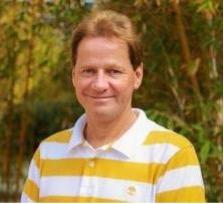
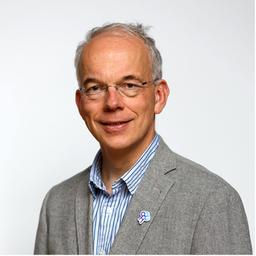
Detlef Lohse
University of Twente
Information will be updated soon

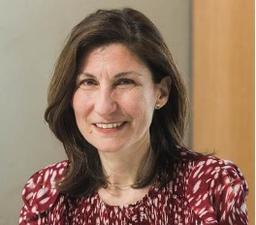
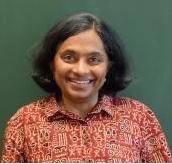
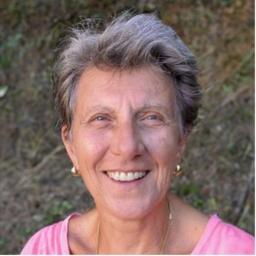
Élisabeth Guazzelli
Université Paris Cité, CNRS

Title
Unifying Viscous and Inertial Rheology in Dense Granular Suspensions
Abstract
Dense granular suspensions, ubiquitous in natural phenomena (e.g., landslides, debris flows) and industrial processes (e.g., concrete, pastes), exhibit complex rheological behaviour that remains poorly understood. Since Bagnold's seminal work in 1954, the viscous-to-inertial transition in these systems has posed a fundamental challenge. A detailed review of precise rheological measurements, obtained using a custom-built rheometer capable of pressure- and volume-imposed rheometry, is presented. The results reveal a transition from Newtonian to Bagnoldian rheology with increasing inertia, though the shear stress transitions more slowly than the granular pressure, resulting in distinct unifying scalings based on stress additivity. Particle-resolved simulations further substantiate these findings, offering a mechanistic explanation for the observed scaling behaviour. The transition corresponds to a shift from rolling to sliding contacts in particle interaction dynamics, driven by the combined influence of tangential contact and hydrodynamic forces, including near-range lubrication and far-field effects. This integrated experimental and numerical approach advances our understanding of granular suspension rheology across flowing regimes.
This work has been done in collaboration with P. Aussillous, M. Ichihara, A. Khodabakhshi, S. Konidena, O. Pouliquen, F. Tapia, B. Vowinckel.
Biography
Élisabeth Guazzelli is a CNRS researcher specialising in particulate multiphase flows, including granular suspensions and sediment transport. Based at the MSC Laboratory of Université Paris Cité, she previously led a dynamic research group at IUSTI, Aix-Marseille Université. She serves as Rector of the International Center for Mechanical Sciences in Udine and is the JFM Rapids Editor for the Journal of Fluid Mechanics. A Fellow of the APS and EUROMECH, she has received the EUROMECH Fluid Mechanics Prize (2016), APS Fluid Dynamics Prize (2023), and Gay-Lussac-Humboldt Prize (2024). She is also an international member of the Istituto Veneto di Scienze, Lettere ed Arti and the US National Academy of Engineering.

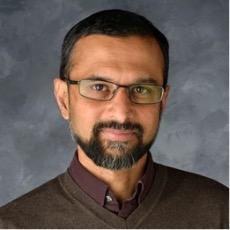
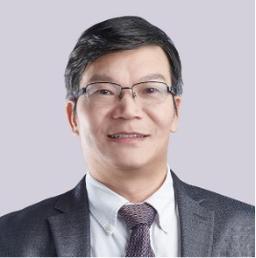
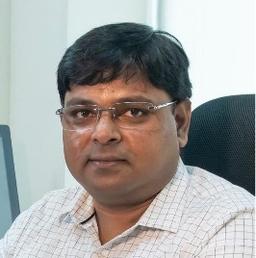
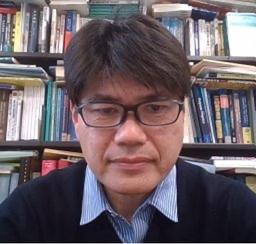
V. Kumaran
Indian Institute of Science
Title
Multi-scale modeling and rheology of lamellar mesophases
Abstract
Lamellar mesophases, formed in water-surfactant solutions at certain concentration ranges, consist of alternate sheets of surfactant bilayers and water layers at fixed layer spacing of tens of nanometers. The viscosity of a sheared lamellar mesophase is found to be many orders of magnitude higher than that predicted for a perfectly ordered state, and it is found to be system-size dependent. This is due to the presence of disorder and defects. There is a complex structure-rheology relationship where shear alters the structure, and the structure determines the rheology. Microscale simulations are infeasible because a typical macroscopic sample contains 10⁵ − 10⁶ layers. A mesoscale formulation has been developed based on an order parameter that distinguishes the hydrophilic and hydrophobic parts. The parameters in the model are related to molecular properties. Mesoscale simulations reveal several novel phenomena, such as the annealing and creation of defects under shear leading to disordered steady states, defect interactions, the complex interplay between mass and momentum diffusion resulting in novel structures and system-size dependent rheology.
Biography
V. Kumaran is Professor in the Department of Chemical Engineering, Indian Institute of Science, Bangalore. He received his B. Tech from the Indian Institute of Technology Madras in 1987, and his PhD from Cornell University in 1992. His research is in the areas of statistical mechanics, fluid mechanics and the dynamics of complex fluids. He has received the Bhatnagar Prize for Engineering Science in 2000, the The World Academy of Sciences (TWAS) Prize for Engineering Sciences in 2014, and the Infosys Prize for Engineering and Computer Science in 2016.

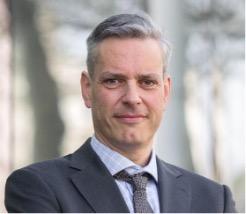
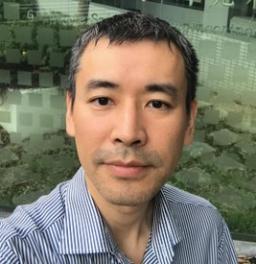
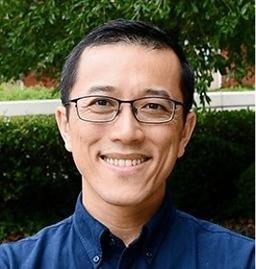
Shu Takagi
The University of Tokyo
Information will be updated soon

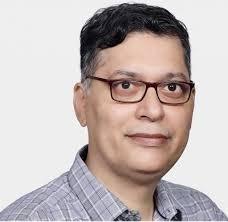
Olivier Desjardins
Cornell University

Title
Making a Computational Splash: An Enhanced Volume-of-Fluid Framework for Multiscale Atomization Modeling
Abstract
Liquid sprays are ubiquitous and technologically essential. They appear in everyday processes (showers), in industrial manufacturing (spray drying), in propulsion systems (fuel injection), and in environmental flows (sea spray). Understanding sprays requires predictive models of how they form. Computational prediction of turbulent multiphase flows remains challenging. The difficulty is particularly acute when breakup and topology change occur, as in primary atomization, because the process spans a wide range of coupled length and time scales—from injector dimensions and turbulent eddies to thin liquid sheets and ligaments whose thickness often falls below practical grid resolutions. We present a high-fidelity multiscale framework built on the geometric Volume-of-Fluid method. Subgrid interfacial features are represented using multiple planar segments, paraboloids, or cylindrical surfaces within a control volume. This allows thin sheets and ligaments to persist without numerical breakup, while preserving strict mass conservation, computational efficiency, and compatibility with finite-volume solvers. Insufficient mesh resolution no longer forces topology change. Breakup is instead introduced explicitly through physics-informed models. Several closures for thin-film and ligament rupture in aerodynamic atomization are demonstrated, showing that this framework can predict droplet size distributions at practical resolutions with tractable computational cost.
Biography
Olivier Desjardins is Professor of Mechanical and Aerospace Engineering at Cornell University. His research focuses on high-fidelity simulation and modeling of multiphase turbulence, with emphasis on liquid–gas atomization and particle-laden flows. His group develops advanced numerical methods and physical models for complex multiphase flows across a wide range of scales. He received the National Science Foundation CAREER Award, the Junior Award from the International Conference on Multiphase Flow, and the Marshall Award from the Institute for Liquid Atomization and Spray Systems. He recently led a multi-university research program funded by the Office of Naval Research on spray control and serves on the Executive Committee of the American Physical Society Division of Fluid Dynamics and on the Board of Directors of ILASS.

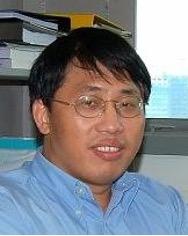
Anthony Wachs
University of British Columbia
Title
Particle-Resolved simulation of flows laden with non-spherical particles: from spheres to ellipsoids, cylinders, polyhedrons and snow flakes.
Abstract
The impact of the shape of rigid bodies immersed in a fluid on the dynamics of the flow is well documented in the literature. Yet, many questions remain open when the shape significantly departs from the idealized sphere, ranging from, e.g., trajectory path of settling non-spherical rigid bodies to particle-induced turbulence modulation in channel flows. I discuss results computed with a Distributed Lagrange Multiplier / Fictitious Domain (DLM/FD) method implemented on a dynamically adaptive octree grid. The DLM/FD method features many valuable properties: semi-implicitness, sharpness, volume forcing and robustness. The implementation leverages the power of the open source platform Basilisk and relies on our in-house Discrete Element Method software Grains3D to compute collisions between rigid bodies. Local octree grid adaptivity is key to capture the fine features of boundary layers developing around complex-shaped rigid bodies in inertial regimes, i.e., up to a particle Reynolds number of 500. As an advanced application of the numerical model, I show recent results on the dynamics of settling snow flakes.
Biography
Anthony Wachs has been a Professor in the department of Mathematics and in the department of Chemical and Biological Engineering at the University of British Columbia, Vancouver, Canada, since 2015. He also holds associate memberships in Mechanical Engineering and Computer Science. Before 2015, he spent 15 years as a research engineer and scientific advisor at IFP Energies nouvelles (previously known as French Petroleum Institute), Paris and Lyon, France. His research interests pertain to the numerical modelling, scientific computing and physical analysis of granular and particle-laden flows.