KTH Royal Institute of Technology
The cooperation between IIT Madras and KTH has a long history, with both Universities involved in educational projects and research collaboration between individual faculties. This relationship was formalized by signing an MoU between both Universities in 2012, with student mobility commencing in 2014. In January 2019, Prof. Stefan Östlund, Vice President for Global Relations, led a KTH faculty delegation to IIT Madras for a joint workshop to explore avenues for deepening the collaboration. As a result, a joint PhD supervision agreement and a key partner agreement was signed between former KTH President Prof. Sigbritt Karlsson and IIT Madras Director Prof. Bhaskar Ramamurthi in New Delhi during the state visit of His Majesty King of Sweden to India in December 2019.
KTH and IIT Madras have advanced research facilities and researchers in most topics related to technology, and hence several research co-operations exist between the faculty. Prominent topics of existing collaboration are Electric Power Engineering, High Voltage Engineering, Transportation Engineering, Biotechnology, Wireless Communication, Artificial Intelligence, Material Science, and Computer Science. After the signing of the agreement in Dec 2019, joint PhD supervision between research groups has started and it is expected to grow in the coming years.
IIE at KTH:
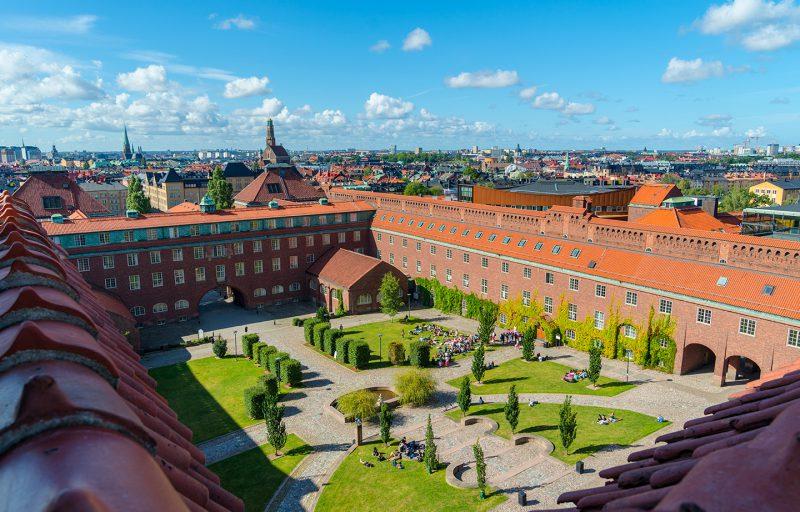
KTH Royal Institute of Technology is the largest and oldest technical university in Sweden and ranks among the top ten in Europe. The campus is an arena for bringing highly talented students, teachers and researchers together to share perspectives from around the globe. As Sweden & #39 largest and highest-ranked technical university, KTH provides excellent conditions for its 2,000 doctoral students and an excellent international research environment where English is the primary working language.
KTH is located in Stockholm, the capital of Sweden, which provides all the amenities of a large city in terms of culture, business, history and good public transport. Stockholm is surrounded by plenty of green areas and water and is known for its great natural beauty. KTH Campus is near the city centre and adjacent to a large national park, allowing plenty of sports and recreational activities. Sweden is one of the safest countries in the world, and nearly 90% of its population speaks English.
“For further information about life on Campus and to learn more about the different schools, please watch the following video:”

We welcome IIT Madras PhD students all year round; however, the period between 15 June to 15 August, as well as 15 December to 15 January, is not recommendable due to long holiday breaks and empty campus facilities.
“Housing will be guaranteed via the KTH relocation office (furnished apartments, either studio apartments or one-bedroom apartments). Please find further information here:”

The International Immersion Experience is inviting PhD students for jointly supervised research stays at both institutions in the following areas (at KTH):
Division of Electromagnetic Engineering and Fusion Science (School of Electrical Engineering and Computer Science, Prof. Hans Edin ):
The research area of High Voltage Engineering spans from design aspects of high voltage devices to physical phenomena of importance for understanding of high voltage insulation properties. A key research area is the development of diagnostic methods to detect ageing and deterioration of high voltage insulation. Such methods are commonly related to partial discharge detection and analysis and dielectric response methods. High voltage insulation with applications in AC and DC are of interest
Division of Energy Processes (School of Engineering Sciences in Chemistry, Biotechnology and Health, Assistant Prof. Shareq Mohd Nazir):
The research involves
- Process synthesis and design
- Proof-of-concept demonstration with experiments
- Process modelling and simulation
- Techno-economic analysis with the central focus on two topics:
- Greenhouse gases mitigation
- Bioenergy conversion
Within these central topics, we are working with co-removal of greenhouse gases (CH4, N2O and CO2), CO2 capture, utilization, and storage (CCUS), decarbonizing industry, hydrogen generation via thermochemical conversion, biomass pyrolysis and gasification.
Division of Network and Systems Engineering (School of Electrical Engineering and Computer Science, Prof. Carlo Fischione):
The research area of Machine Learning and Communications and Networking spans from wireless networking analysis, signal processing for communication and networking, and communication protocol optimization to machine learning topics such as federated learning, distributed optimization, and deep learning. We investigate the application of these methods and networks to support any Internet of Things systems, such as smart cities or smart electrical grids. A key area is the design of wireless communication methods that support distributed machine learning applications, such as radio resource management for federated learning and over-the-air computation. We also investigate machine learning methods to improve communication protocols, such as channel and quality of service prediction via deep learning.
Department of Chemical Engineering, Division of Resource Recovery (Assistant Prof. Fred Marques Penha):
For more information about this research opportunity, please refer to the detailed documentation:
Department of Fibre and Polymer Technology, Division of Polymeric Materials (Antonio Capezza):
For more information about this research opportunity, please refer to the detailed documentation: